Engineering is a team sport.

The metrics shouldn't treat it like a factory floor.

Ometo connects to your issue tracker and reads every team against its own baseline, surfacing where predictability is breaking, how much capacity unplanned work is consuming, and which defects are pulling teams off plan. It returns a diagnosis, not a scoreboard.

For engineering leaders who still care about their people.

Request early access In alpha · by invitation
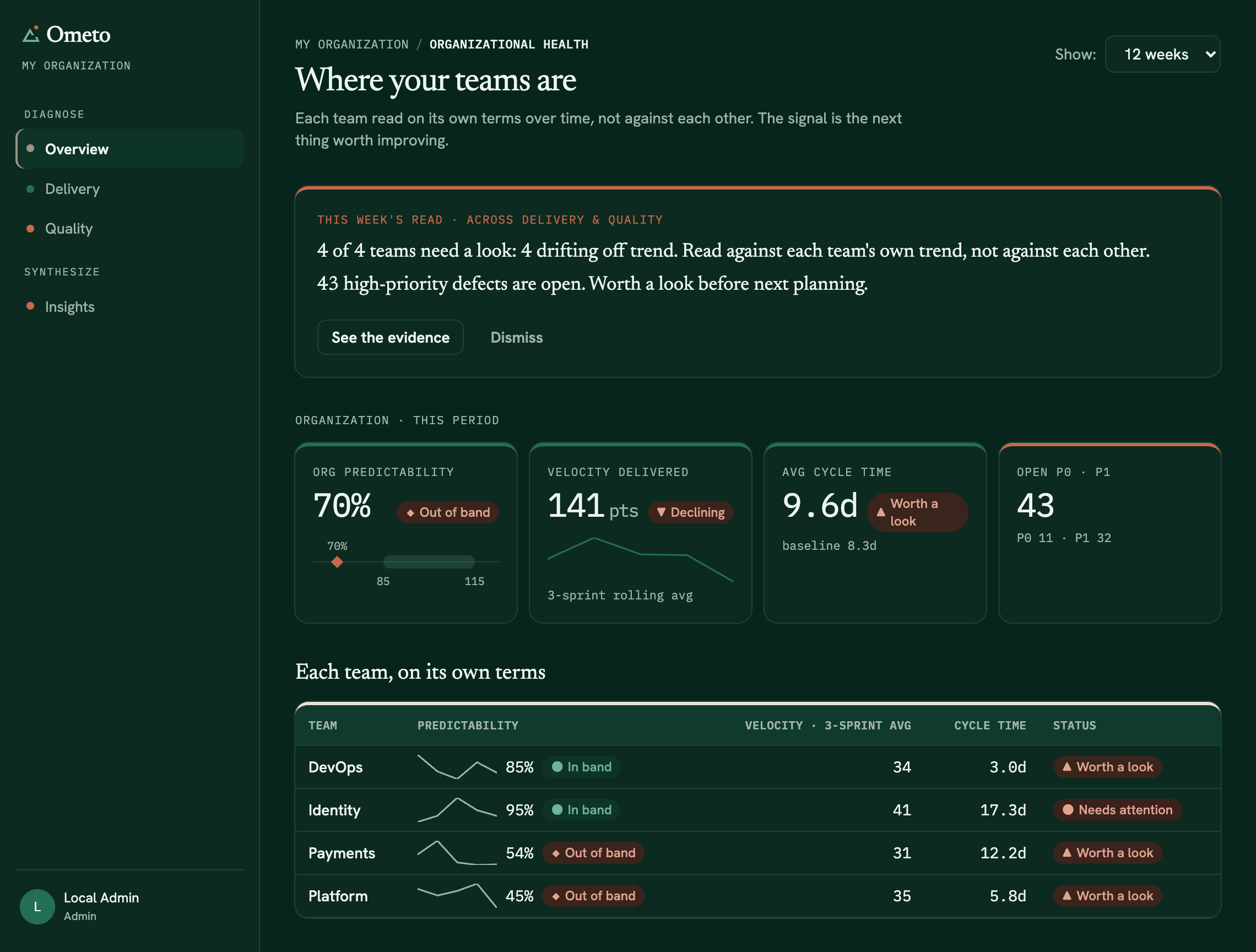
Ometo Overview dashboard showing organizational health across several engineering teams, with delivery and quality signals summarized.
How it works

Powered by your existing ticket tracking system.

Ometo reads the work your teams are already doing. No new process, no engineer filling out a form, no rollout plan.

Step 1

Connect your tracker.

Ometo reads your existing Jira project history. Sprints or Kanban, whichever you actually run.

Step 2

Establish each team's baseline.

Every team gets a band built from its own history. A team is compared against itself over time, never compared against the team next to it.

Step 3

Get the diagnosis.

When a signal leaves the band, Ometo says what moved, what it means, and what to look at before next planning.

What a read looks like

A velocity drop is a symptom. Ometo shows you where to look.

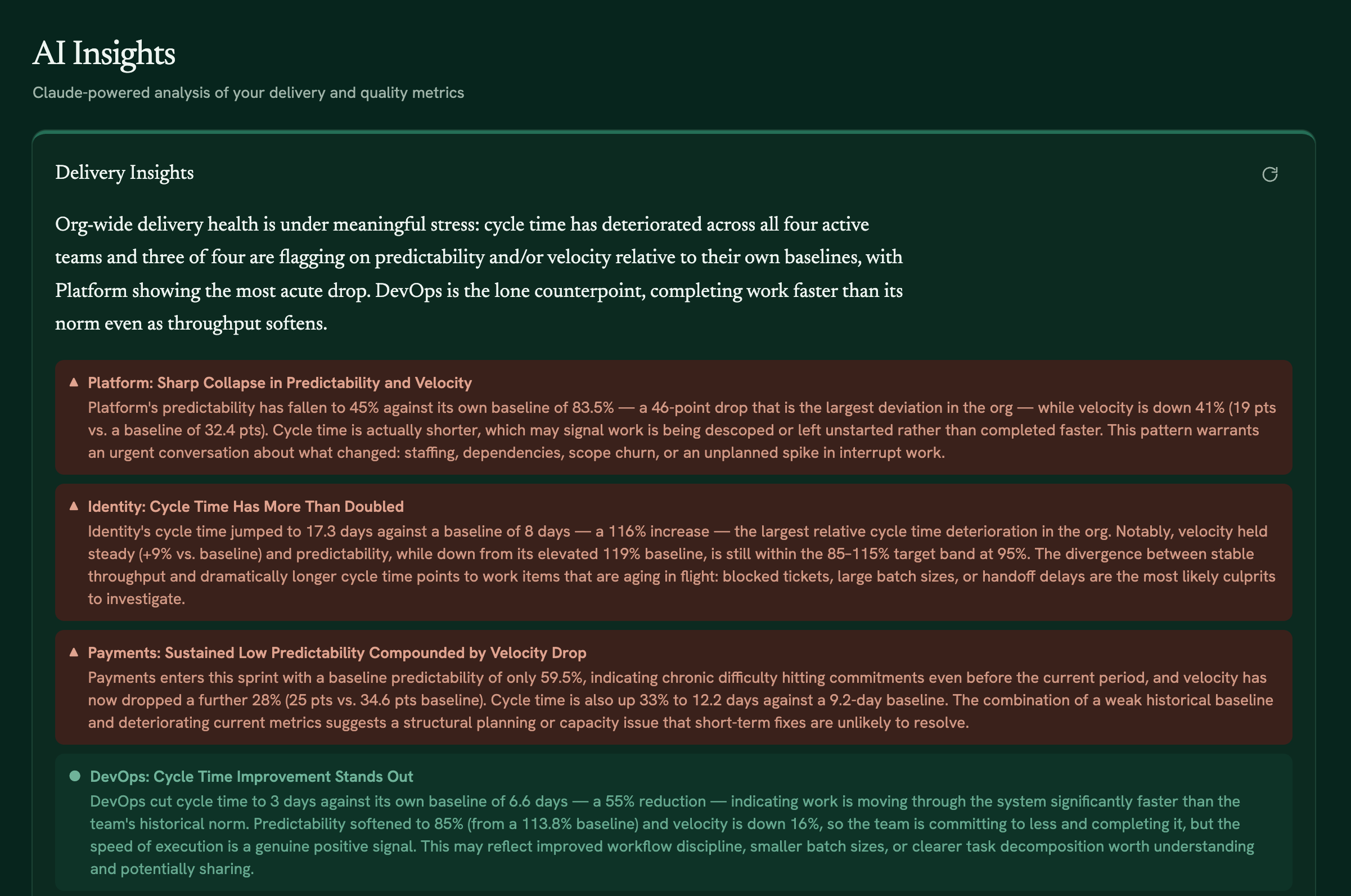
One team's predictability fell to 45% against its own baseline of 83.5%.

Predictability vs. own baseline45%Out of band
Velocity vs. own baseline−41%Out of band
Cycle time vs. own baseline−33%Improved
The read

Cycle time improved while velocity and predictability collapsed. That pattern points to work being shed rather than accelerated. Worth asking whether scope is being cut or work is blocked, before assuming an estimation problem.

Ometo AI Insights for Delivery, explaining a team's predictability and velocity drop against its own baseline in plain language.

Every delivery read is computed from your own sprint history.

What it measures

Three dimensions, plus the layer that reads across them.

Team health.

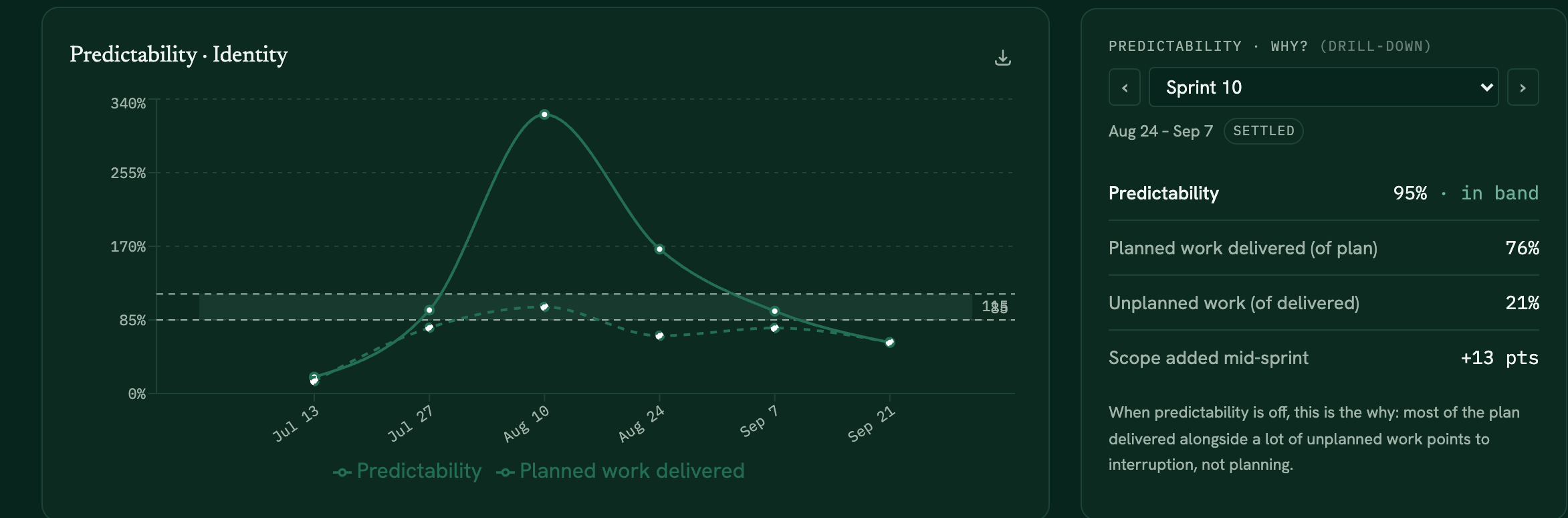
Can your teams predict what they'll deliver? Where is unplanned work coming from, and how much capacity is it quietly consuming?

Ometo Delivery view for one team: a predictability trend beside a sprint drill-down showing unplanned work and scope added mid-sprint.

Organizational health.

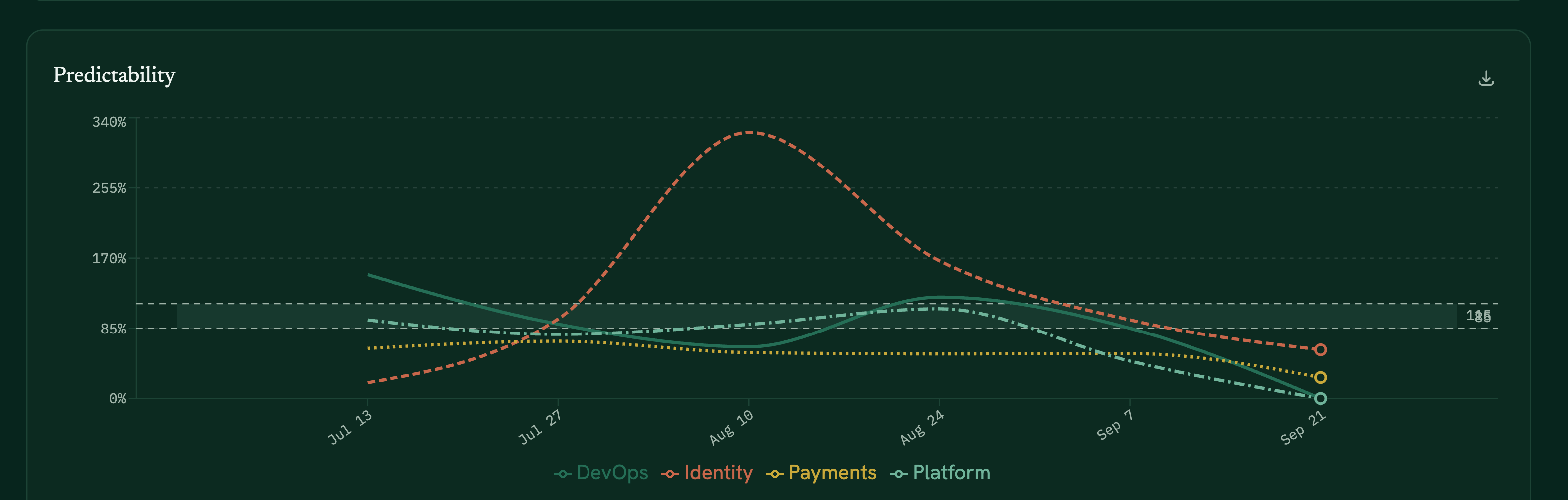
How do your teams compare, as a coaching tool, not a ranking? The aggregate view tells you where leadership attention should go and what kind of attention each team actually needs.

Ometo Delivery aggregate across all teams, comparing each team against its own baseline as a coaching view rather than a ranking.

Product health.

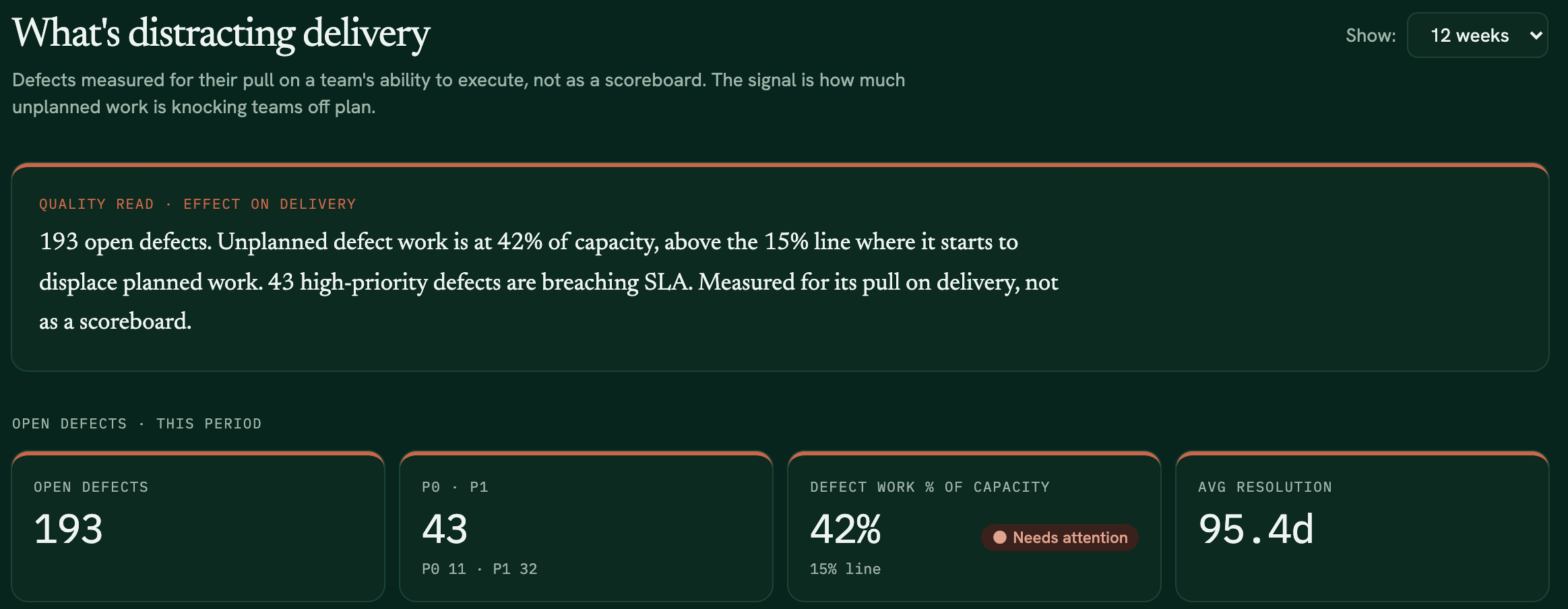
Is defect debt accumulating quietly? Are the right bugs getting fixed in the right order, or is the team working on whatever is easiest to close?

Ometo Quality view showing which defects are pulling the team off plan, ordered by priority.

AI synthesis.

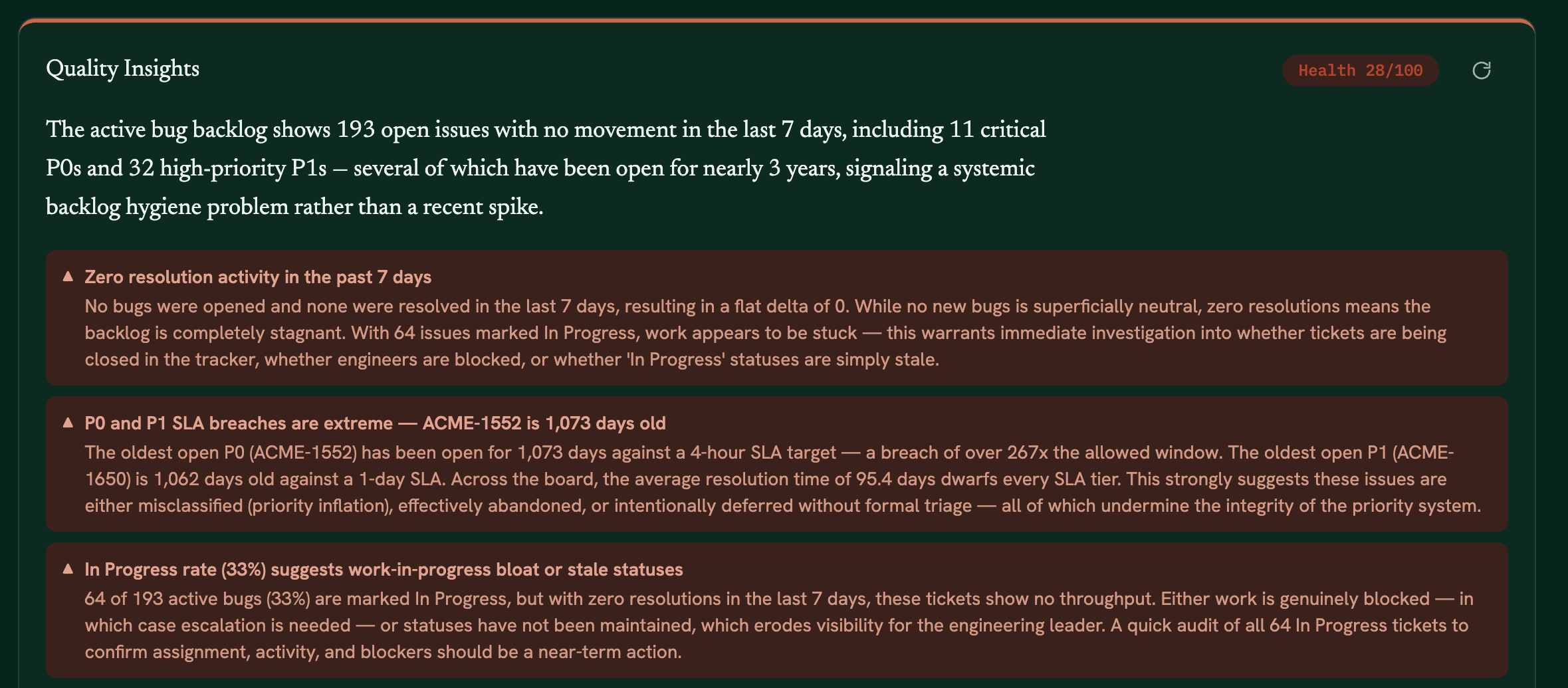
Claude reads across delivery and quality together, connecting signals that no single metric surfaces on its own, and writes the read in plain language.

Ometo AI Insights for Quality, reading across delivery and defect signals together and writing the summary in plain language.
Who it's for

Engineering leaders who still care about their people.

Ometo is built for CTOs, VPs, and Directors of Engineering at mid-size technology companies: people accountable for multiple teams who have tried the existing tools and found them incomplete.

Use it for

Understanding why a team's predictability is declining before you have the conversation.

Knowing whether unplanned work is quietly consuming your team's capacity.

Don't use it for

Benchmarking engineers against each other.

Building the case for a headcount reduction.

Replacing the conversation with a dashboard.

Where this came from

This wasn't built as a product.

It was built to solve a specific problem: engineering leadership that needed to rebuild trust with an organization that had stopped believing in the team. That problem showed up again and again, in different organizational shapes, at different scales, in both sprint and Kanban environments. The instrument was the same each time.

What it kept doing was finding the right problem. Not the obvious one, not the one leadership had already decided was the culprit, but the actual one.

The methodology is public. You can read about it at raleighschickel.com. Ometo is what happens when fifteen years of that work becomes a product.

Request early access

Ometo is in alpha. Access is by invitation.

The goal is to work closely with a small number of engineering leaders who want to help shape the product before it opens up.

Your engineering data stays yours. Nothing is shared, sold, or benchmarked across companies.